
VOL.06—Recess
Living with your inner child in mind

It’s been a few weeks since my last volume, so I hope you’ve been taking care. I’ve been playing around with the structure and content of bluprint lately, and I’m excited to share a slight redesign! I won’t bore you with the details, but I’ll include in the postscript if you’re curious.
22.92
Happy Friday architects,
It’s an early summer afternoon in fifth-grade social studies—yellowed world maps plaster the walls and sun rays start to leak beneath the shades. Having just finished drawing in my last few latitude and longitude lines on the day’s worksheet, I glance back and forth between the clock and my preoccupied teacher. There are five minutes left in the period. I brush the eraser shavings off my desk and take inventory of my pencil case, twice. The sun’s warmth hits my leg, offsetting the aggressively frigid AC air. Restless, I check the clock again. Only fifteen seconds have passed. It’s the longest period of the day—the five minutes before recess.
In elementary school, I remember the mad rush in the hallways as the recess bell rang—kids bursting out their classrooms and a building bursting at the seams.
Behind my elementary school, there were two woodchip islands for jungle gyms—one with a metal slide and one with a plastic slide where kids played ‘gorilla tag’, a tag variation where you weren’t allowed to touch the ground. The swings and see-saws were where kids ‘gossiped’; the basketball court was where all the sporty kids played ‘knockout’; but the most fascinating were the kids who’d just run around the field and invent games. I remember some of my friends and I pretending we were characters from Sonic the Hedgehog, a video game I was obsessed with growing up. We’d turn open fields and colored metal structures standing over mulch into Green Hill Zone (see below) and make up the rules of the game as we went. Yet, as creative as we were, I don’t remember ever thinking too much about it (a concept). For thirty minutes, it was simply fun for the sake of fun.

Lately, the topic of career has been top of mind, not in the sense of corporate advancement, but rather what I’m most curious about, who I can help most, and what lifestyle I want to have. I’ve fully abandoned the absurd idea that college is where you discover yourself and instead have turned to the ten-year-old-me for some advice.
I had a variety of dream careers growing up, but the one I remember most vividly was to become an architect. I was a Lego boy, but I also loved this one hand-me-down set from my childhood neighbor. It was a set of blue and yellow square and rectangular block pieces that attached at the edges (think a cross between legos and puzzle pieces). I would build and carry farmhouses and buildings bigger than my own short, chubby body downstairs to show my dad. I also have a vivid memory, a few years later, of me sitting on my skateboard in the middle of my cul-de-sac. Drawing sketches of hoverboards, I was certain that I was going to be the first person to design and invent the “air board.”
But somewhere along the way, there was an inflection point. I was never great at sketching nor did I believe I had the eye for design. So, in high school, like many of those around me, I got practical. There’s nothing wrong with making practical life choices, per se. But I’m starting to reflect on how my family has raised me to value practicality and stability (this is another whole letter), and to reconsider what my touchstones should be going forward.
In navigating the river of our careers, there’s value in living with your inner child in mind. Even in the workplace, I just see us as kids who have learned to suppress ourselves in the name of professionalism. One of my fears is the idea of life losing its shine—the awe of learning a new skill or simply opening a letter from a friend. So, I’ve been trying to redirect any excess value I place on status and material things. It’s okay to take yourself less seriously. It’s okay to just play. Go roll down a hill this weekend. Our inner children were imaginative, creative, and kind, and we should hold onto them before the next bell.
Playfully,
Brandon

on Shoshin
The Japanese term, shoshin, is a Zen Buddhist principle that translates to ‘beginner’s mind’. Following this volume’s theme of youth, shoshin is about tapping into that curious humility we’re most familiar with when learning a new skill or subject.
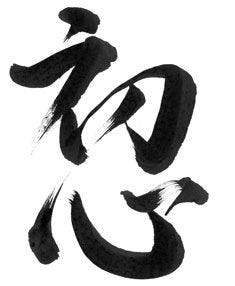
For myself and many of my peers just starting their careers, this concept may feel especially apt or comforting. “Freshman year of the rest of your life” may be melodramatic, but with new routines, environments, and responsibilities, I’ve become a beginner again in many ways. In other words:
I have no clue what I’m doing.
And I don’t trust anyone, in a similar position as me, who thinks otherwise. So, here’s to checking our egos and overconfidence at the door and to fostering our ‘beginner’s minds’.
Some concepts and actionable way to practice shoshin:
'The illusion of explanatory depth’ = our tendency to overestimate our understanding of various topics. Address this by trying to explain concepts to yourself or a friend out loud or in writing.
Combat confirmation bias by seeking out info and perspectives that either contradict or are unique to your own (especially relevant).
Bake some awe into your days! Staying at home can be boring, but it doesn’t have to be. If you run, go off your usual path this weekend. When I first moved to San Francisco, I’d run down a different street each day to get a better sense of my neighborhood. If the sunset hits different one day, just sit down without your phone and watch. If all else fails, maybe just put on some Planet Earth.
on Pandemic Time
Why time feels so weird in 2020
Did January or February even happen? This interactive article includes a series of perception tests to illustrate the complexities of our sense of time.
A summary of the ideas presented in the piece:
No single organ is responsible for timekeeping.
For longer periods, our perception of time may depend on the number of salient memories we have during the period. If every salient memory represented a tick on a clock, a repetitive April may feel like it went by really fast. What about seasons? How long did spring feel to you?
The oddball effect—we pay extra attention to novel experiences and suppress repetitive days.
Telescoping—we rely on memory rather than knowledge to date events within our lifetimes. When recalling an event from a long time ago, we tend to think it happened more recently than it did. When recalling an event within three years, we tend to think it happened longer ago than it did.

📝 The Fire Next Time
While reading James Baldwin’s The Fire Next Time, I felt like I was highlighting something on almost every page. Here’s a passage that especially stuck with me.
Something very sinister happens to the people of a country when they begin to distrust their own reactions as deeply as they do here, and become as joyless as they have become.
It is this individual uncertainty on the part of white American men and women, this inability to renew themselves at the fountain of their own lives, that makes the discussion, let alone elucidation, of any conundrum—that is, any reality—so supremely difficult.
The person who distrusts himself has no touchstone for reality—for this touchstone can be only oneself. Such a person interposes between himself and reality nothing less than a labyrinth of attitudes. And these attitudes, furthermore, though the person is usually unaware of it (is unaware of so much!), are historical and public attitudes.
They do not relate to the present any more than they relate to the person. Therefore, whatever white people do not know about Negroes reveals, precisely and inexorably, what they do not know about themselves.
📷 Muir Beach
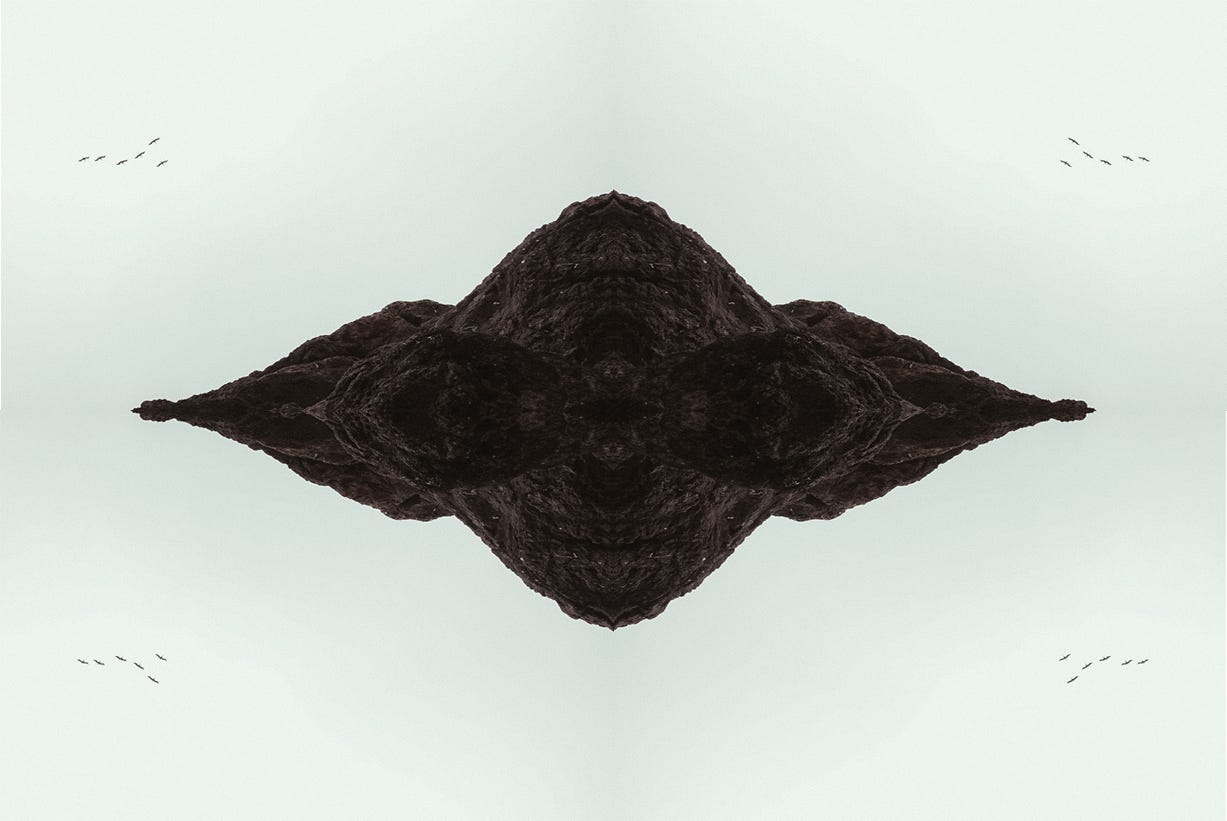
Here are two frames I took with my point & shoot this past weekend reminding you to go out & play (safely).



🎶 TAKE TIME
Giveon’s latest EP, Take Time, features buttery smooth baritone vocals, stripped-back production, and intimate songwriting. The album plays it relatively safe, but still manages to create a refreshing take on the age-old man-navigates-a-love-gone-wrong narrative.

Some of my favorites:
p.s.
What’s New:
These changes are intended to make both the writing and reading experience better, so please let me know what you think!
The section headers got an upgrade and subsection titles are slightly smaller.
Hyperlinks are colored (in ~bluprint blue~), rather than underlined
I rebalanced the sections to feel: letter (40%), ideas (35%), muses (25%).
Letter will now be the primary focus.
Ideas replaces ‘curiosity’. It holds the same essence, but in a more bite-sized format and with greater variety.
Muses replaces ‘curated’. While this publication is mainly about writing, I’ll be including other inspirations to make the read more dynamic.
Easter egg: if you’ve read this far, you deserve a ⭐️. If you would be interested in learning more about/potentially participating in a new experiment I’m working on for bluprint, please email me!
If you’re interested in some of my other works, check me out @ brandonlu.com. You can also find me on Instagram & Twitter.