
VOL.09—Nostalgia beyond Memories
Perhaps it will be pleasant someday to remember even this
Welcome to the first bluprint of 2021. I write to you from one of a million cul-de-sacs in New Jersey soon to be covered in 16-22 inches of snow. A nor’easter is coming to remind us of heart of winter, so stay warm my east coast friends.

23.45
Hi architects,
At my desk, I sit a few feet away from boxes of old notes and yellowed journals tucked away in my drawer. Every now and then, I find old photos of myself, like a pin from kindergarten when my head was too big for my body or a print of me holding a round snowball up to my even rounder face. The memorabilia around me, from the sentimental to the comical, has turned my childhood bedroom into a pseudo-time machine. I’ve been traveling a lot lately, just not through space, but time.
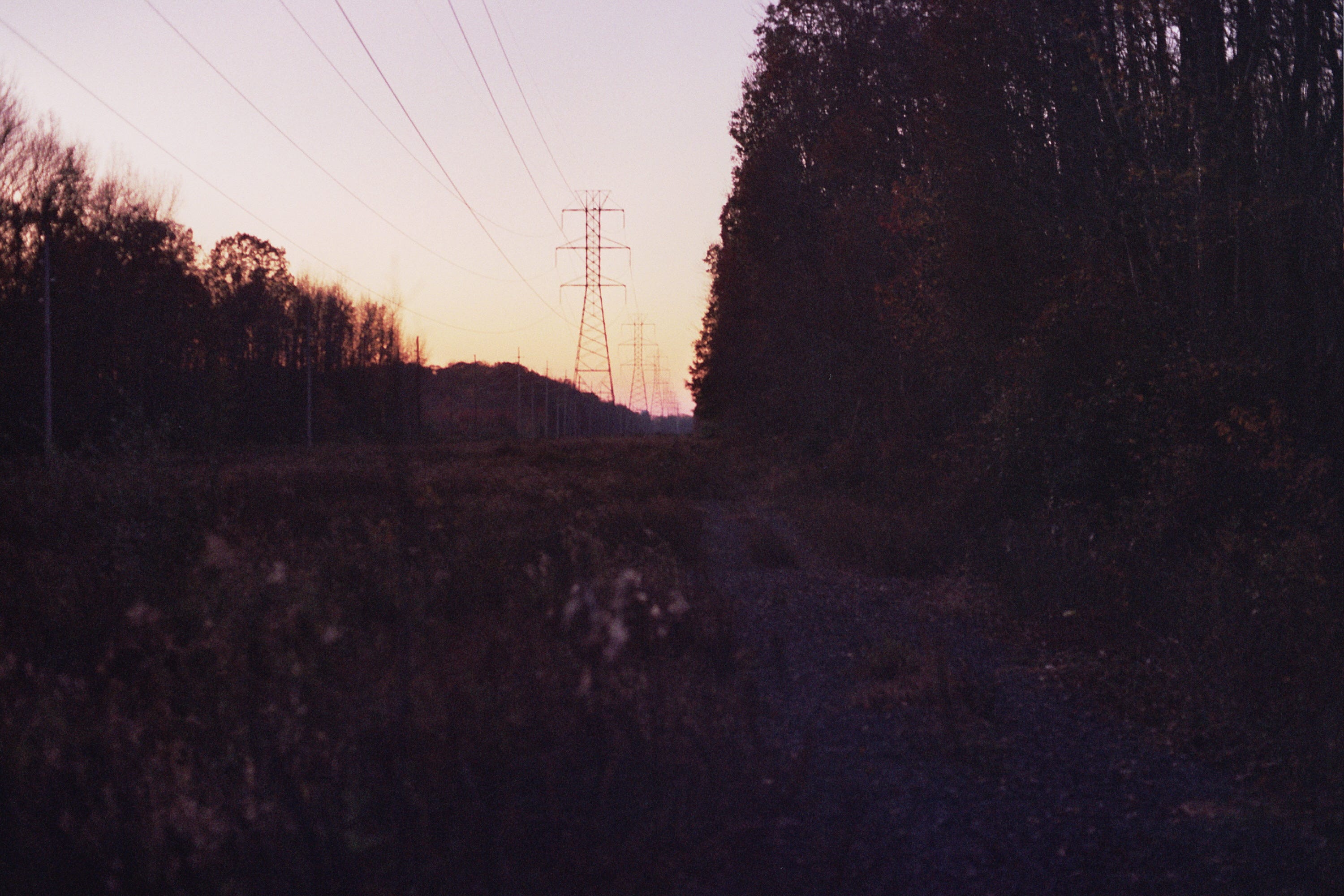
The other night, I decided to re-read one of the yellowed journals. It started in the fall of my freshman year of college, a time when my handwriting was more legible. There were names I wrote about as if we had been best friends that I can barely recall today. There was a grease smudge on the page I wrote about treating myself to a breakfast pork roll from Lyn’s while skipping math lecture. Then, there was a breadcrumb of rose-tinted nights with a doomed romantic relationship written between the lines. That was my cue to close the journal, but my eyes glued to the disaster as if I were driving past it on the side of the freeway.
Without getting into the details, I eventually remembered that I used to only write in this journal when I was upset. I thought of my friend S, who would tell me that she didn’t like to go through old journals, as they were better off just for catharsis. This must’ve been what my seventeen-year-old self intended for as well, but I still caught myself reminiscing. Usually, when people describe nostalgia, they refer to a longing for a time or place with happy associations. But, my experience here was the contrary—feeling contentment for a time with unhappy associations. It was nostalgia, inverted.
I thought I was being delusional, so I asked M to describe how he experiences nostalgia. To my surprise, he told me that nostalgia had always been a positive emotion for him. He always seemed to be able to look back fondly on memories without the need to sulk over, compare, or replicate his past experiences in the present. I figured this was a good start, but I knew that there was more to nostalgia.
So, down the rabbit hole, I went.
Coined by Swiss physician Johannes Hofer in 1688, “nostalgia” was a medical term used to describe soldiers and sailors with a melancholic longing to return home (nostos means the desire to return home and algos means pain). By the early 20th century, ‘home’ began to be interpreted more broadly to include abstract places such as past experiences or moments. Then, researchers began to characterize nostalgia by three components: cognitive, affective, and conative. The traditional view became that for each instance of nostalgia, there was a retrieval of autobiographical memories, a negative emotion, and a desire to relive or re-experience something.
However, Felipe De Brigard, associate professor of philosophy at Duke, goes on to challenge each of these components in his essay, “Nostalgia Reimagined”. He discusses some key scientific developments in memory and imagination, but I’ll try my best to summarize some of his points:
We are capable of feeling nostalgic for a variety of events and times, even those that we have not personally experienced because nostalgia doesn’t need autobiographical memories.
Nostalgia can be bittersweet—involving both positive and negative valences. De Brigard also believes that most researchers have the causation order for nostalgia backward: nostalgia doesn’t always cause negative affect, but rather, is caused by negative affect.
The object of nostalgia’s desire is a place-in-time. In other words, a person can desire something but remain unsatisfied when they get the object of desire because either the place or time did not match up.
While knowing all the different ways to analyze nostalgia may be unnecessary for the average person, his premise has stuck with me: nostalgia doesn’t need real memories. As someone who has obsessed with documenting their life lately, this is unsettling at first. It highlights our fallibility, bias, and irrationality. Ironically, these are also what makes us most human. His premise also suggests that nostalgia is not just a fleeting emotion, but a powerful force of inspiration with potential for good or bad. De Brigard ends his essay with a relevant note on nostalgia’s role in political propaganda and the dangers of when imagined pasts turn into delusions, so, I’ll close instead with imagined nostalgia’s potential for good.
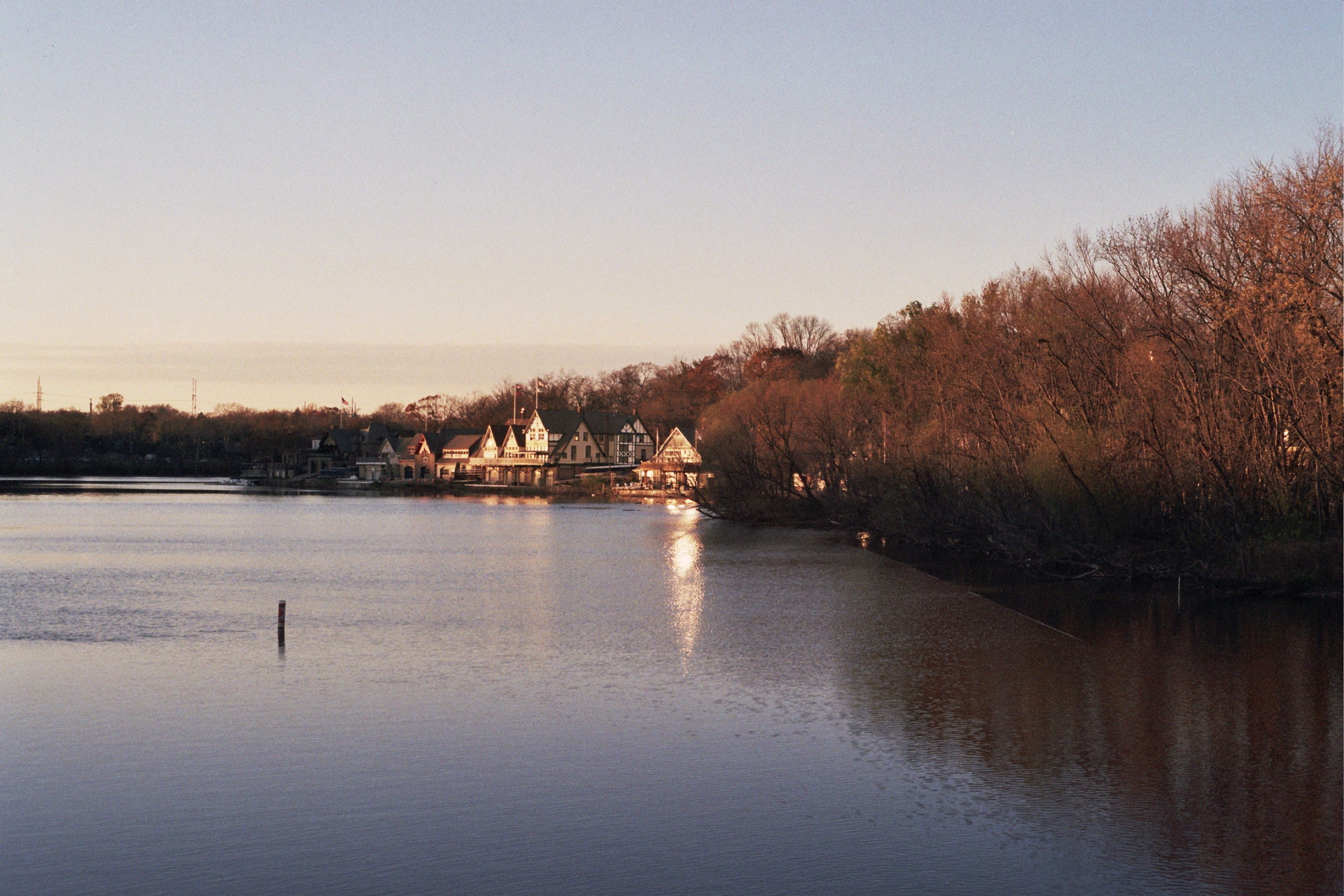
When I find myself reminiscing—diving into old journals, photo albums, and automated “On This Day” reminders, I realize I’m seeking some kind of comfort. In happier memories, that is rather simple so long as I don’t overstay my welcome. In sadder memories, it’s more complicated, but I can find it by recognizing things I’ve been able to move on from that I may have once felt I never would. This is of course easier said than done, but it’s reassuring to know that I can discover meaningful reflections, as I am sharing right now.
Just as we travel to new places to stimulate behaviors, thoughts, and feelings and learn something new about ourselves, perhaps my recent mind-wandering of nostalgia throughout this pandemic shares similar motivations. I’m curious as to how we will choose to remember the pandemic in both the history books and in our minds. Many of us will try to archive it deep within our minds as soon as possible. Yet, part of me wants to believe that perhaps it will be pleasant someday to remember even this time—that when our present and future turn to the past, a combination of our memory and imagination will allow us to preserve the gratitude and clarity we sought all along.
Bittersweetly,
Brandon

on Retro-Futurism
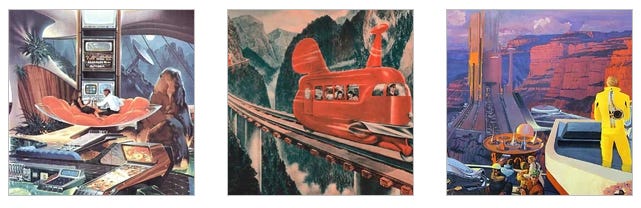
If futurism is sometimes called a "science" bent on anticipating what will come, retrofuturism is the remembering of that anticipation.
There’s something alluring about the arts and sciences’ fascination with depicting the future. Whether as experimental designs or blatant escapism, a generation’s future-charting can say a lot about its circumstances and values. While I don’t write about it much here, my time working in the financial tech space has given me a greater appreciation for the complexity of the work being done. I am hopeful that the decentralization of financial services from traditional banks and disintermediation between citizens and central banks will push out the horizon for small businesses and the underbanked. These ideas help us imagine futures where merchants have greater control and autonomy over offering financial services. They remind us that PPP and other forms of government disbursements can be simplified and disintermediated.
It’s not that I believe technology alone is the answer to these deeply rooted and public problems. But, techno-optimism, or at least a healthy amount of it, still seems to be the best way forward. When I see retro-futuristic art, I see people dreaming. I think of the letters we write in grade school to our future selves with high hopes and higher expectations. We rarely fulfill those expectations, but that doesn’t undermine the value of writing them in the first place. Our strive toward those dreams and sketches of the future is already an optimism worth carrying on.
& other things I’ve been thinking about:
Liminal spaces may be the most 2020 of all trends
“Many of the images of liminal spaces are structures and interiors from the 80s and 90s, which lends itself to the feeling of "strange familiarity" and uncanniness people describe from these images. There's a connection to the dreamlike quality of vaporwave and the forlornness of abandoned malls.”In defense of disorder: on career, creativity, and professionalism - Chia's blog
“Professionalism is a lie, build what you love, explore everything. In today’s age of creation, anyone who attempts to tell you otherwise is lying. You’ll end up seeking what you traded for the rest of your life.”This $GME meme and many others

📚 Einstein’s Dreams
Einstein’s Dreams by Alan Lightman
For in this world, time does pass, but little happens. Just as little happens from year to year, little happens from month to month, day to day. If time and the passage of events are the same, then time moves barely at all. If time and events are not the same, then it is only people who barely move. If a person holds no ambitions in this world, he suffers unknowingly. If a person holds ambitions, he suffers knowingly, but very slowly.
From one of thirty dreams on the paradoxes of time from a fictionalized Albert Einstein. Reading the dreams feels like listening to an articulate and curious friend of yours ramble on about the universe at 2am. From subtle exaggerations to straight-up fantasy, the chapters are brief and magical meditations that I plan on returning to from time to time (ha).
& other things I’ve been reading:
The Midnight Library by Matt Haig
A fantasy fiction about a girl who loses the will to live and attempts to take her own life, only to land in a liminal space between life and death called the Midnight Library. There, she’s able to live alternative lives and explore her life’s infinite ‘what-ifs’ if she had made different life decisions. I was worried that the execution of this story would be cliché, but Haig presents a story that is ultimately uplifting.The Silent Patient by Alex Michaelides
A psychological thriller about a woman who goes silent after a violent act against her husband and a psychotherapist who is obsessed with uncovering her motives. I found the story pretty hard to put down while also giving much to discuss—the portrayal of mental health care, relationships, childhood trauma.The Stranger by Albert Camus
Through a quick and simple story, Camus conveys numerous philosophical questions on absurdism. What makes someone human? How much of our emotions are shaped by the expectations of others and a desire for acceptance? I’ll be reading The Myth of Sisyphus next!
📷 Bay-dreaming
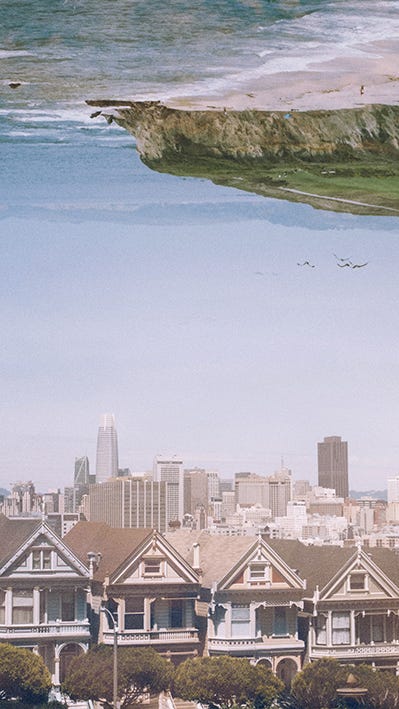
Where the sky meets the sea. Thinking of friends, coastlines, and taquerias along the Pacific.
🎶 Black & White
Black & White - Ta-ku & matt mcwaters
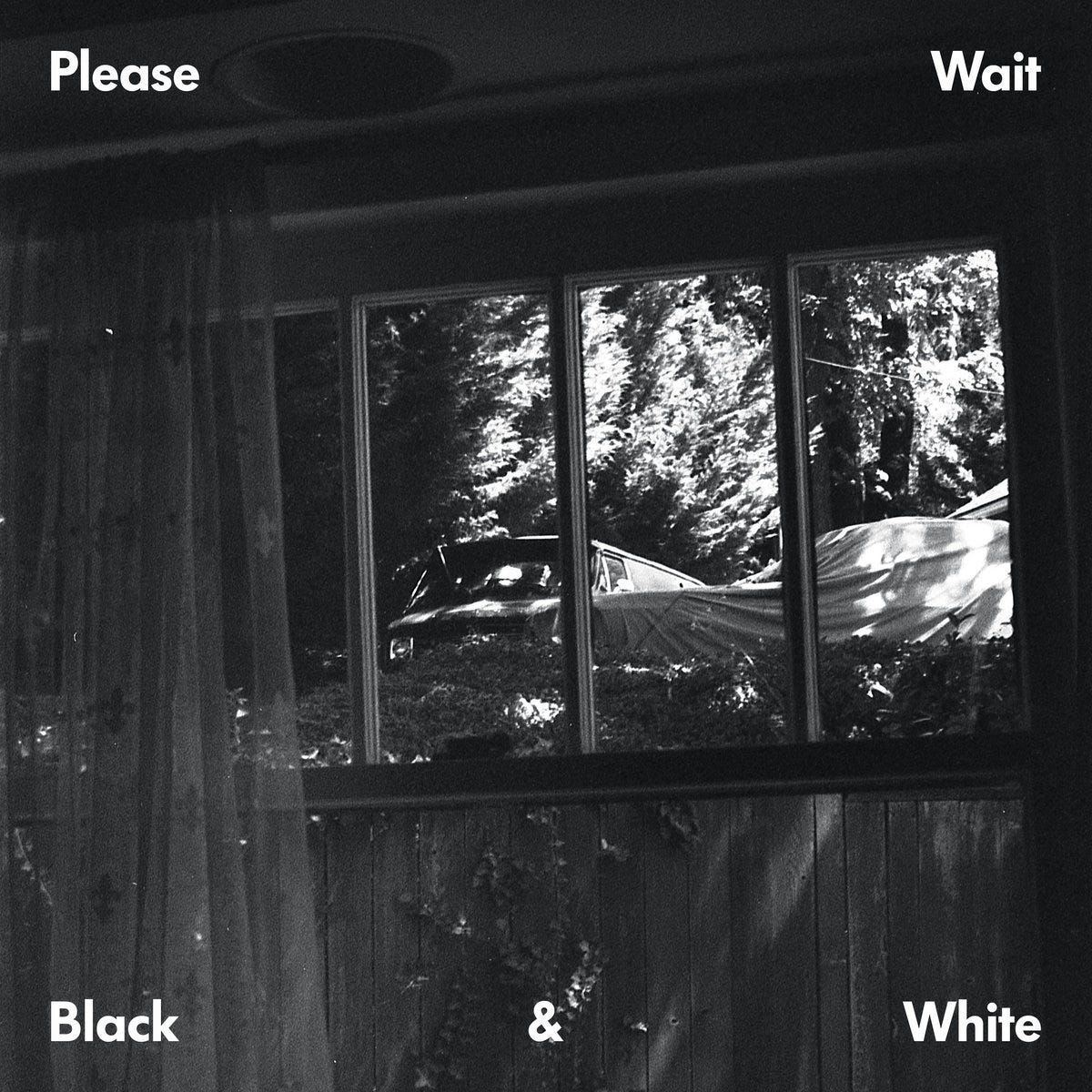
If nostalgia were an album, it would be Black & White. The EP occupies the space between memories, and Ta-ku & matt mcwaters’ production is immersive. It’s also great music to have on when you’re trying to focus.
& other things I’ve been listening to:
Where U Goin’ Tonight? - Mac Ayres
Nowhere in this economy (pandemic)Close to You - Dayglow
A little mood booster from my Discover WeeklyDreams, Fairytales, Fantasies - A$AP Ferg, Brent Faiyaz, Salaam Remi
Ferg with the 90s flow, but I can’t believe Brent Faiyaz’s not butterYou Can’t Save Me - SiR
It’s 3am. Do you know where your sadboys/girls are?
That’s all for this volume! If you’re enjoying bluprint, please subscribe, share it with a loved one or write back to me. You can also find me on Instagram & Twitter.